About the author
Lauren Dobischok

Every STI has a different incubation period. The incubation period is the time between the moment of infection and when symptoms first appear. Knowing the incubation period of different STIs is helpful when determining if the symptoms you may be experiencing are due to an STI or not. Many people wonder if symptoms of an STI can occur one or two days after having sex. In this article we will discuss how quickly symptoms of certain STIs can occur, what symptoms to watch out for, and when to get tested.
Many STIs cause similar symptoms following an infection that signal something isn’t right. Common STI symptoms are:
Keep in mind: The absence of symptoms does not mean the absence of infection. Many people with an STI feel completely healthy.
Source: NHS, 2022
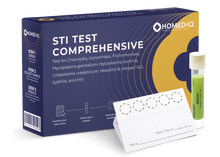
If you are in doubt whether your symptoms are from an STI, getting tested is always a good idea. Homed-IQ’s STI Test Complete checks for 6 common STIs and can be done from home.
While most STIs take several days to weeks before symptoms appear, a few can cause symptoms within 48 hours of infection.
Genital herpes: Symptoms typically appear 2-12 days after exposure. In rare cases, blisters or sores may appear as early as 48 hours.
Gonorrhea: Symptoms usually appear 2-5 days after infection, but discharge or pain can develop within 48 hours in some cases.
Important: Not experiencing symptoms within 48 hours does not mean you are uninfected. Many STIs never cause noticeable symptoms, and the only way to be sure is to get tested.
Source: NHS, 2025; NSW Ministry of Health, 2025
The window period is the time between infection and when an infection can be detected by a test. Testing too early can lead to a false-negative result. The window period for each STI is as follows:
| STI | When to test? |
|---|---|
| Chlamydia | ≥ 2 weeks after a possible risk exposure. If symptoms are present: test immediately; if the result is negative, test again after 2 weeks. |
| Gonorrhoea | ≥ 2 weeks after a possible risk exposure. If symptoms are present: test immediately; if the result is negative, test again after 2 weeks. |
| Syphilis | ≥ 3 months after a risk exposure. |
| HIV | Depending on the test used: from several weeks up to ≤ 3 months after a possible risk exposure. If the result is negative, test again after 12 weeks to rule out infection with near-complete certainty. |
| Trichomonas | ≥ 4 weeks after a possible risk exposure. If symptoms are present: test immediately; if the result is negative, test again after 4 weeks. |
Source: NHG, 2025
The incubation period is the time between infection and the first appearance of symptoms. This differs from the window period, which relates to testing. The incubation periods per STI are summarized in the table below:
| STI | Incubation Period |
| Chlamydia | 1-3 weeks |
| Gonorrhea | Average of 5 days |
| Trichomoniasis | 4-28 days |
| Syphilis | Average of 3 weeks |
| HIV | 2-6 weeks |
| Hepatitis B | 4 weeks to 6 months |
| Herpes | 2-12 days |
Source: RIVM, n.d.-c; RIVM, n.d.-d; RIVM, n.d.-e; RIVM, n.d.-f; RIVM, n.d.-g; RIVM, n.d.-h; RIVM, 2024
Not all sexually transmitted infections cause visible or noticeable symptoms. In fact, a large percentage of people with STIs remain asymptomatic, meaning they do not develop any signs of infection even though they can still pass the infection to others. For example, studies show that up to 50-70% of chlamydia cases show no symptoms at all (CDC, 2025). This is why relying on symptoms alone is not a safe way to know if you have an STI. The only reliable method is to get tested according to the correct window period, even if you feel healthy.
The diagnostic process begins with a medical history, during which symptoms and personal risk factors are assessed. This includes questions about current complaints, past infections, and sexual practices. This is followed by sample collection and a physical examination, where blood, urine, or swabs from the genitals, throat, or anus are taken to detect specific pathogens. Physical exams may also reveal visible abnormalities such as skin changes or inflammation. The collected samples are analyzed in the lab for bacteria, viruses, or fungi that may be causing the symptoms. After testing, the findings are discussed, the diagnosis is explained, and appropriate treatment – such as antibiotics or antiviral medications – is initiated (Cleveland Clinic, 2023).
A swab is performed using a sterile cotton swab to collect mucus membrane or secretion samples. Depending on the suspected infection, samples are taken from the urethra, vagina, anus, or throat. This process takes only a few seconds, is generally painless, and targets contact areas of sexual activity.
STIs for which swab tests are used:
Trichomoniasis
Human papillomavirus (HPV)
Source: MedlinePlus, 2024; Cleveland Clinic, 2023
Testing for STIs using a urine sample requires providing a small amount of urine in a sterile container. For accurate results, the first morning urine or the initial stream is often used. The sample is then analyzed in a laboratory, especially for infections in the urinary or genital tract.
STIs for which urine samples are used:
Chlamydia and gonorrhea
Trichomoniasis
Source: MedlinePlus, 2024; Cleveland Clinic, 2023
An STI test via blood sample requires drawing a small amount of blood from a vein, usually from the crook of the arm or via a finger prick. The sample is taken under sterile conditions and analyzed in a lab to detect bloodborne infections or infection markers.
STIs for which blood samples are used:
HIV
Syphilis
Hepatitis B and C
Genital herpes (to determine if you’ve been exposed to the virus, even if there’s no active infection)
Source: MedlinePlus, 2024; Cleveland Clinic, 2023
Use condoms or dental dams during vaginal, anal, and oral sex to reduce the risk of transmission.
Get vaccinated against HPV and hepatitis B, which are common viral STIs with effective vaccines.
Limit the number of sexual partners or choose mutually monogamous relationships where both partners have tested negative.
Test regularly if you are sexually active, especially if you have new or multiple partners.
Communicate openly with partners about sexual health, testing history, and protection.
Avoid sharing needles or sex toys unless they are properly cleaned or covered with a new condom.
Seek medical care early if you notice any unusual symptoms, or if you think you may have been exposed.
Source: Australian Government Department of Health, Disability and Ageing, 2024
The window periods for STIs are usually a range of weeks or months. It is not recommended to test before the window period has ended because there is a chance of getting a negative test result even if you have an infection (false negative). However, if you have symptoms that could indicate an STI before the window period has passed, you should visit your doctor or a sexual health clinic. They can consult you on your specific situation, provide testing, and administer follow-up care.
Since you can also have STIs without any symptoms, it is important to test yourself after potential exposure to an STI, even if you don’t have symptoms.
These two terms are often confused.
The window period is the time between being infected and when a test can reliably detect an STI.
The incubation period, on the other hand, indicates how long after infection symptoms will appear. If you have symptoms, it is still important to keep the window period in mind. Testing before the window period is over can yield a false-negative result. If you aren’t experiencing symptoms, it’s advised to wait until the window period is over before testing to avoid unnecessary testing. Are you experiencing potential STI symptoms? Then visit your doctor or a sexual health clinic for further advice.
Important: Many sexually transmitted infections (STIs) can occur without symptoms. This means that an infection may still be present even if you have no symptoms. Only a test performed after the window period has ended can provide reliable results (Cleveland Clinic, 2024)
The following points may help determine whether an STI test is necessary:
Testing may be useful if you experience symptoms – note that many STIs are asymptomatic
Testing is particularly recommended in high-risk situations, especially when:
After unprotected sex (oral, anal, or vaginal): Without condoms or other protective measures like dental dams, the risk of STI transmission increases significantly, as body fluids such as semen, vaginal secretions, or blood can carry pathogens.
When experiencing symptoms: Signs like itching, unusual discharge, pain during urination, or changes to the skin in the genital area should be taken seriously and examined.
Before starting a new relationship: Before entering a new sexual relationship—especially if it is intended to be monogamous—an STI test provides safety and trust. It helps ensure that neither partner carries an undetected infection.
If you have frequent changes in sexual partners: Regular testing is essential in this case to detect hidden infections early. Many STIs are asymptomatic but can still have serious health consequences and be passed on without symptoms.
After a one-night stand: A single sexual encounter, especially with an unfamiliar person, carries a higher risk of STI exposure. Even if condoms were used, they do not offer complete protection against all infections (e.g., herpes or HPV). If your partner's health status is unknown, an STI test is especially important.
Before and during pregnancy: If a pregnancy is planned, an STI test is recommended to rule out infections that could pose a risk to mother and child. Routine STI testing is also part of prenatal care to detect and treat infections such as chlamydia, syphilis, or HIV early, helping prevent complications like premature birth or neonatal infection.
As a preventive measure: Even without symptoms or suspicion, regular tests are advisable, especially for those with an active sex life. Prevention helps protect your health and that of your partners.
After shared use of sex toys: If sex toys are not cleaned hygienically or are shared with others, pathogens can be transmitted. An STI test can help detect and treat potential infections early.
Routine testing is advised even in the absence of symptoms, as many STIs remain undetected for a long time but are still contagious. According to health guidelines, women under 25 who are sexually active should be tested for chlamydia regularly. Testing can be done annually or with each new partner and helps detect, treat, and prevent the spread of infections. Routine STI screening is also important before planning a pregnancy to avoid complications (Sexual Health Clinic London, n.d.).
A positive STI test result – whether from an at-home test, doctor, or test center – can initially be unsettling. However, it’s important to stay calm, as many infections are easily treatable. The next steps may include:
Consultation: A doctor will explain the infection, possible complications, and treatment steps.
Treatment: Depending on the infection, treatment may include antibiotics (e.g., for chlamydia) or antiviral medications (e.g., for HIV).
Partner notification: Sexual partners should be informed and tested to prevent further transmission.
Follow-up testing: After treatment, repeat testing may be recommended to confirm that the infection has been successfully treated.
Prevention: Counseling on protective measures, such as consistent condom use, to prevent future infections.
Source: Cleveland Clinic, 2023
It’s important to note that false-positive test results are possible, especially if the test is conducted outside the diagnostic window. The diagnostic window is the time between exposure and the point at which a test can reliably detect an infection. If testing occurs too early, the results may be inaccurate. In such cases, follow-up tests or a doctor’s consultation is advised to confirm the diagnosis and avoid unnecessary treatment (Deutsche Apotheker Zeitung, 2019).
Yes. During the diagnostic window period, you can still transmit the infection to others. Therefore, it is important to be cautious during this period and use condoms until you have a reliable test result.
STIs can cause a range of symptoms that take varying amounts of time to appear. While it is possible to experience symptoms of an STI within 48 hours, this is not very common. If you test for an STI before having symptoms or before the window period is over, the test result may not be reliable. That is why it is important to check the incubation and window periods of various STIs if you are experiencing symptoms before getting tested, and to wait until the window period is over if you are not experiencing symptoms yet.
At-home testing with laboratory accuracy
Our medical laboratories operate according to strict European quality standards. All tests are analysed by ISO-certified partner labs, giving you reliable and professional results. With the comfort of your home.