About the author
Lauren Dobischok

You have just received the results of a blood test, and one value stands out: your hemoglobin level is higher than normal. This can be confusing, especially if you are not experiencing any symptoms. Hemoglobin is a protein in your red blood cells that transports oxygen throughout your body. Although an elevated value does not always cause noticeable complaints, it can be an important signal that deserves attention. On this page, you will learn what a high hemoglobin level means, what the possible causes are, and when it is important to take action.
What Symptoms and Risks Are Associated with High Hemoglobin?
What Can You Do If Your Hemoglobin Level Is Too High or Too Low?
Hemoglobin (Hb) is a protein in your blood that is found in red blood cells and gives your blood its red color. Its main function is to transport oxygen from your lungs to the rest of your body. At the same time, it carries carbon dioxide (CO₂) from your body back to your lungs, where you exhale it.
Hemoglobin plays an essential role in your body’s oxygen supply. When your hemoglobin level is too low, your blood cannot transport enough oxygen, which may lead to symptoms such as fatigue, dizziness, headaches, and shortness of breath.
When hemoglobin levels are too high, your blood can become thicker and more viscous. This may increase the risk of blood vessels becoming blocked. That’s why it’s important to understand what your hemoglobin value means.
Source: Sanquin, n.d.; Billett, H. H., 1990
Your hemoglobin level gives valuable insight into how well your body is transporting oxygen. Even if you don’t experience symptoms, an abnormal value can indicate that something in your body is out of balance.
Monitoring your blood values proactively allows you to spot changes early and take action before problems develop. This is especially useful because some conditions develop gradually without clear warning signs.
Understanding what’s considered normal is the next step—so you can interpret your results with confidence.
Below is an overview of commonly used reference values:
|
Group |
Normal Hb Value (mmol/L) |
Elevated From (mmol/L) |
|
Adult men |
8.7 – 11.2 |
> 11.2 |
|
Adult women |
7.4 – 9.9 |
> 9.9 |
|
Children (1–6 years) |
5.9 – 8.7 |
> 8.7 |
|
Children (6–18 years) |
6.2 – 9.6 |
> 9.6 |
|
Pregnant women |
≥ 6.8 |
- |
Source: Chong, K., 2025
You can compare your own test results with these ranges to get a first impression. Keep in mind that reference values can vary slightly between laboratories. If you’re unsure about your results, it’s always best to consult your general practitioner.
Levels below 8.7 mmol/L in adult men and 7.4 mmol/L in adult women are considered low and may indicate an underlying deficiency, such as iron deficiency or anemia. If your result falls outside these ranges, it’s important to interpret it in the context of your overall health and, if needed, discuss it with your GP (Cleveland Clinic, 2022).
This section helps you understand what might be behind an elevated result. Causes can range from temporary, lifestyle-related factors to underlying medical conditions that may require further evaluation.
Some causes are related to lifestyle or environmental factors and can often be reversed:
Dehydration
Smoking
Living at high altitude
Carbon monoxide exposure
Use of certain drugs (anabolic steroids or erythropoietin-stimulating agents)
In some cases, a high hemoglobin level may be linked to an underlying condition:
Chronic obstructive pulmonary disease (COPD)
Emphysema
Congenital heart disease
Pulmonary fibrosis
Kidney cancer
Liver cancer
Polycythemia vera (a rare blood disorder)
If your hemoglobin levels remain elevated over time, it’s important to follow up with your GP to determine the underlying cause and whether any treatment is needed.
Source: Cleveland Clinic, 2022
Several everyday factors can influence your hemoglobin level:
Your body doesn’t make enough red blood cells: Conditions and diseases can affect your bone marrow’s ability to produce enough red blood cells
Red blood cells are destroyed faster than they can be replaced: Even if your body produces enough cells, they may not last long enough in circulation
Blood loss (e.g. menstruation, injury, illness, or a bleeding ulcer)
Your body can’t absorb iron properly: This affects your ability to produce healthy red blood cells
You’re not getting enough essential nutrients: A lack of iron, vitamin B12, and vitamin B9 (folate) can limit red blood cell production
Certain medical conditions can also play a role:
Lymphoma (cancer of the lymphatic system)
Leukemia (blood cancer)
Aplastic anemia
Pernicious anemia
Multiple myeloma (plasma cell cancer)
Myelodysplastic syndromes
Chronic kidney disease
Antiretroviral medications
Chemotherapy
Bleeding ulcer
Enlarged spleen (splenomegaly)
Sickle cell anemia (inherited blood disorder)
Thalassemia (inherited blood disorder)
If your hemoglobin level remains abnormal, it’s wise to consult your GP for further evaluation.
Source: Cleveland Clinic, 2022
People searching for symptoms of high hemoglobin often want clear answers. Here are the most common signs:
Dizziness
Easy bruising or bleeding
Excessive sweating (hyperhidrosis)
Fatigue
Headaches
Joint swelling
Unexplained weight loss
Yellowish eyes or skin (adult jaundice)
High hemoglobin levels should be taken seriously. In some cases, they can point to an underlying condition that needs attention. Even when no clear cause is identified, persistently elevated levels can increase the risk of complications, such as blood clots. That’s why it’s important not to ignore abnormal results and to follow up if your levels remain high.
Source: Cleveland Clinic, 2022
If your hemoglobin level is outside the normal range, there are practical steps you can take:
Start with self-care:
Drink enough water to stay well hydrated
Stop smoking or reduce exposure
Adjust intense exercise if needed
Maintain a balanced diet with sufficient iron and vitamins
If your levels remain abnormal:
Contact your GP for further testing
Discuss possible underlying causes
Follow medical advice or treatment if needed
If you’re experiencing ongoing symptoms, don’t wait too long to seek help. Taking action early can make a real difference.
Source: Cleveland Clinic, 2022; Cleveland Clinic, 2022
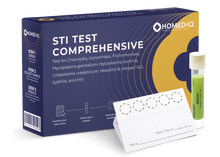
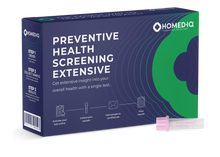
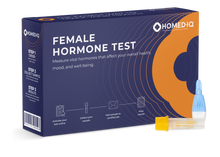
With a test from Homed-IQ, you can easily check relevant markers, such as nutrient deficiencies from the comfort of your own home. Using a simple finger prick, you collect a small blood sample and send it to a certified laboratory for analysis.
Tests such as the Active Vitamin B12 (Holo-TC) Test and the Folic Acid Test can help you identify whether a deficiency in these essential nutrients may be affecting your hemoglobin levels. Your results are then securely available in a personal online dashboard, giving you clear insight into your health.
Even if you don’t have symptoms, gaining insight into your blood values is a powerful step toward taking control of your health.
At-home testing with laboratory accuracy
Our medical laboratories operate according to strict European quality standards. All tests are analysed by ISO-certified partner labs, giving you reliable and professional results. With the comfort of your home.